
The May 2026 marquee sessions in Geneva confirmed a structural pivot in the watch market. Across Christie’s, Sotheby’s and Phillips, the historic market dominance of stainless steel sports chronographs continues to yield to highly curated "shape" watches. For collectors and asset managers, the exceptional premiums commanded by vintage Cartier pieces present clear evidence of this shift. However, it also introduces immediate risk: watch portfolios that have not undergone a formal, line-by-line physical appraisal within the last 24 months are now almost certainly under-insured against current secondary market benchmarks.
The Cartier 'Crash'
The Cartier ‘Crash’ model, originally designed in 1967 and released in a limited edition of 20 for the London Boutique, was re-released in 1990. The undisputed anchor of the Geneva week was an exceptionally rare 1990 18k yellow gold Cartier 'London Crash' at Christie’s. Featuring full Cartier London case signatures, a Jacques Cartier "JC" maker's mark, and original integrated deployant clasp, the timepiece hammered at £1,485,869 (CHF 1,585,000) against a conservative estimate of £468,728-937,456 (CHF 500,000-1,000,000), setting a new world record for any Cartier wristwatch at auction.
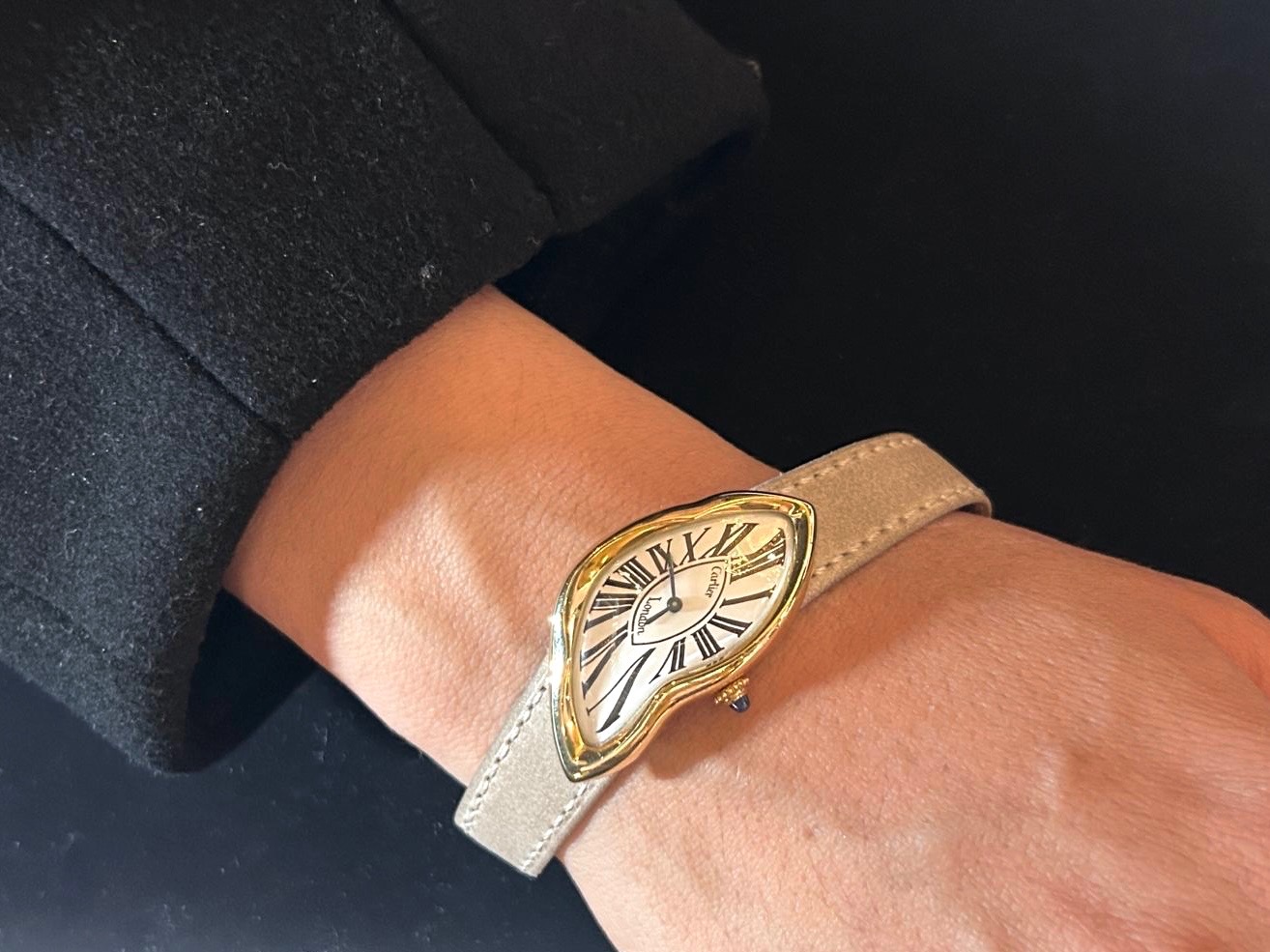
Meanwhile, three examples of the 1991 ‘Paris Crash’, a model restricted to four hundred pieces, demonstrated how heavily collectors value provenance and condition.
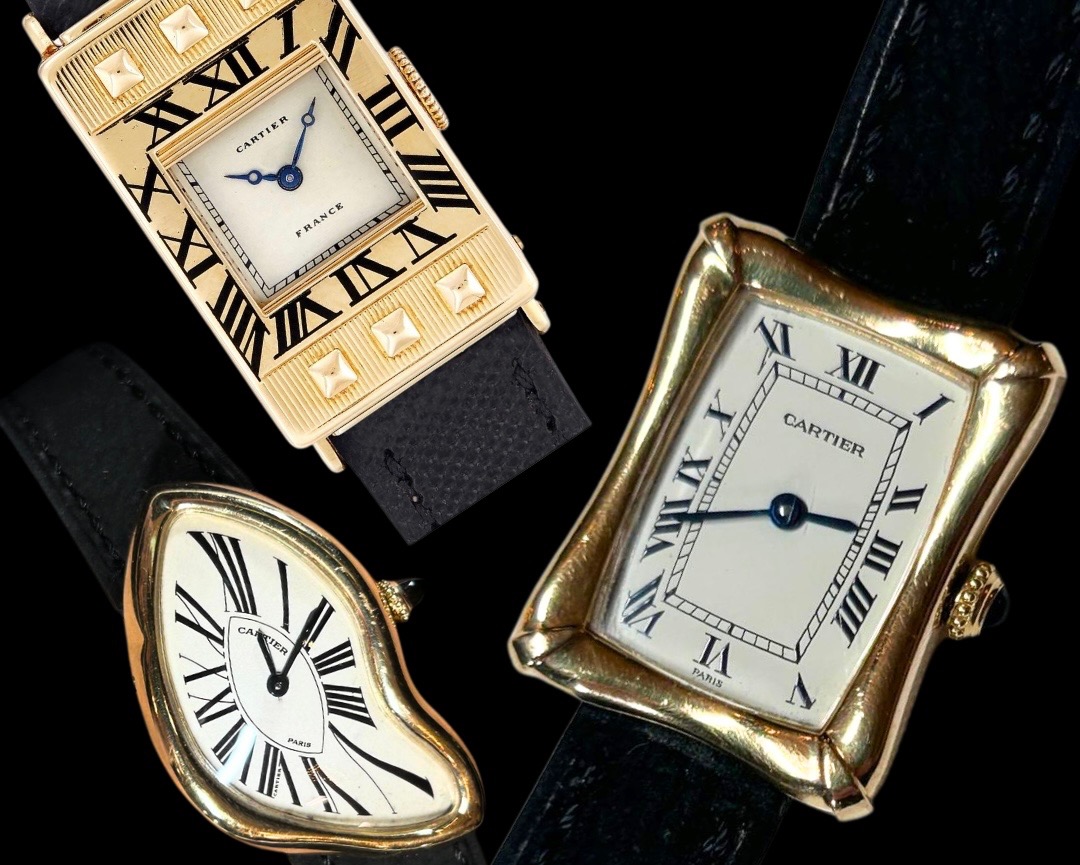
Further proving that collectors are hunting for early, elusive design anomalies rather than purely complex complications, Sotheby’s presented a 1930/31 Cartier ‘Eclipse Guillotine’.
The ‘Eclipse Guillotine’ (made in 1930/31) featured innovative sliding shutters designed to protect the dial, capturing the era's rising passion for outdoor pursuits. While vintage enthusiasts are more accustomed to the Jaeger-LeCoultre Reverso (introduced in 1931 for polo players), this incredibly elusive Cartier is thought to be one of only fifty pieces ever produced for the London boutique. Sotheby’s initially estimated the watch at £22,650-37,750 (CHF 24,000-40,000), but fierce competition blew those figures out of the water, culminating in a final sale of £157,039 (CHF 166,399).
Reflecting the 1970s love of Bohemian bamboo furniture, handbag handles and gold hoop earrings, Cartier produced the ‘Coussin Bamboo’, with its faux bamboo yellow gold case, in two sizes.
Because the oversized 'Jumbo' execution of the Coussin is scarcer in terms of surviving production numbers than standard 1990s Crash models, many specialists view this sub-six-figure result as a strong foothold for future appreciation.
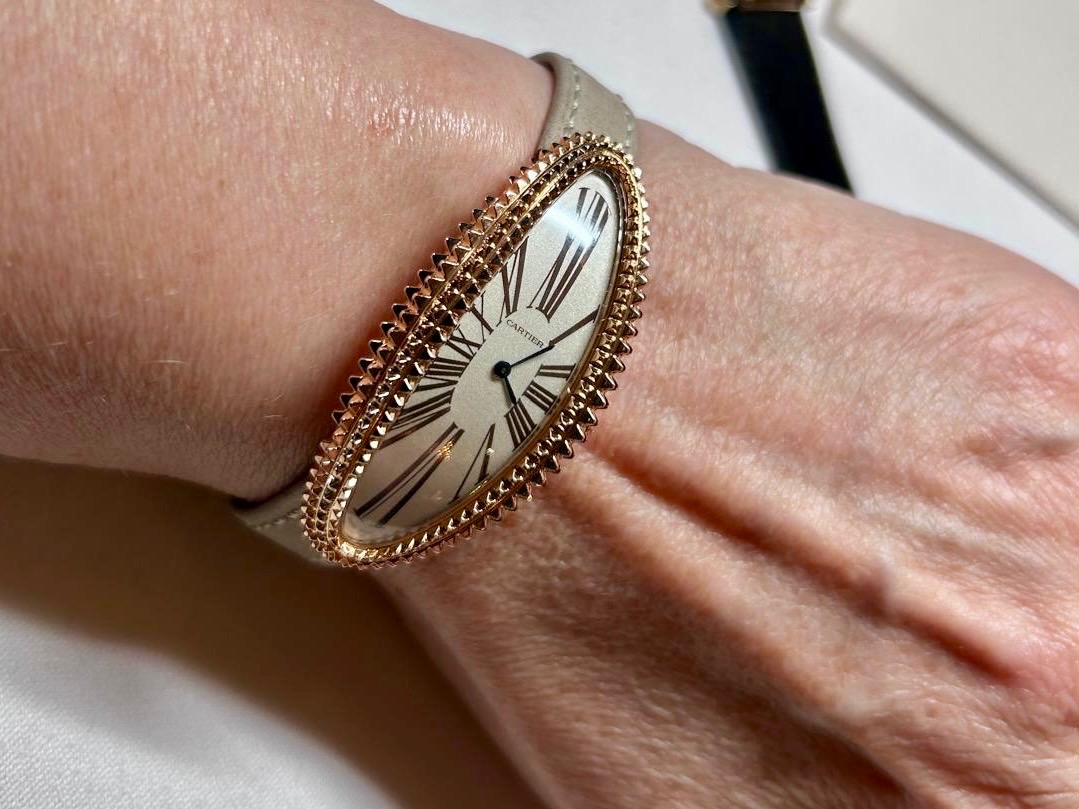
While the elongated Baignoire Allongée remains in production today, retailing at £44,100 in rose gold and £47,000 for the diamond-set white gold variant, Christie’s presented a unique twist on the 1912 classic. This specific piece was a 2019 redesign that integrated a contemporary, raised hobnail bezel. It made enough of an impact to achieve £47,942 (CHF 50,800) against an estimated £14,156-33,031 (CHF 15,000-35,000).
Valuation Risks: Addressing the Replacement Gap
When a specific watch model or brand experiences an overnight, exponential escalation in value, the primary risk to the collector is the insurance replacement gap.
Most standard jewellery insurance policies are written on a "retail replacement value" or fixed schedule basis. If your collection contains vintage Cartier, early independent watches or shaped mid-century jewellery pieces appraised prior to this surge, your current coverage is likely linked to obsolete market data. In the event of a total loss, the payout would be insufficient to secure a comparable piece at current auction hammer prices.
Furthermore, correct contemporary fair market values are a prerequisite for defensible estate planning and tax distributions.
Ensure your collection is insulated against rapid market fluctuations. Contact our valuations team today to arrange a confidential review of your current watch and jewellery schedules.
Les ventes aux enchères de printemps à Genève ont solidifié le statut de Cartier en tant que puissance incontournable du marché de la montre vintage, Christie’s, Sotheby’s et Phillips ayant toutes obtenu des résultats spectaculaires pour des garde-temps d'avant-garde rares. Les sessions phares de mai 2026 à Genève ont confirmé un pivot structurel sur le marché horloger. Chez Christie’s, Sotheby’s et Phillips, la domination historique du marché par les chronographes de sport en acier inoxydable continue de céder la place à des montres « de forme » hautement sélectionnées. Pour les collectionneurs et les gestionnaires d'actifs, les primes exceptionnelles obtenues par les pièces vintage de Cartier constituent une preuve évidente de ce changement. Cependant, cela introduit également un risque immédiat : les portefeuilles de montres n'ayant pas fait l'objet d'une expertise physique formelle et ligne par ligne au cours des 24 derniers mois sont désormais presque certainement sous-assurés par rapport aux références actuelles du marché secondaire.
La Cartier 'Crash'
Le modèle Cartier « Crash », initialement conçu en 1967 et sorti en édition limitée à 20 exemplaires pour la boutique de Londres, a été réédité en 1990. Le pilier incontesté de la semaine genevoise était une rarissime Cartier « London Crash » de 1990 en or jaune 18 carats chez Christie’s. Arborant les signatures complètes du boîtier Cartier London, le poinçon du fabricant Jacques Cartier « JC » et une boucle déployante intégrée d'origine, le garde-temps a été adjugé à 1 485 869 £ (1 585 000 CHF) contre une estimation prudente de 468 728 - 937 456 £ (500 000 - 1 000 000 CHF), établissant un nouveau record du monde pour une montre-bracelet Cartier aux enchères.
Pendant ce temps, trois exemplaires de la « Paris Crash » de 1991, un modèle limité à quatre cents pièces, ont démontré à quel point les collectionneurs accordent de l'importance à la provenance et à l'état.
Prouvant une fois de plus que les collectionneurs recherchent des anomalies de design précoces et insaisissables plutôt que des complications purement complexes, Sotheby’s a présenté une Cartier « Eclipse Guillotine » de 1930/31.
L'« Eclipse Guillotine » (fabriquée en 1930/31) présentait des volets coulissants innovants conçus pour protéger le cadran, capturant la passion naissante de l'époque pour les activités de plein air. Bien que les amateurs de vintage soient plus habitués à la Reverso de Jaeger-LeCoultre (introduite en 1931 pour les joueurs de polo), cette Cartier incroyablement rare est considérée comme l'une des cinquante pièces seulement produites pour la boutique de Londres. Sotheby’s avait initialement estimé la montre entre 22 650 et 37 750 £ (24 000 - 40 000 CHF), mais une concurrence féroce a pulvérisé ces chiffres, pour aboutir à une vente finale de 157 039 £ (166 399 CHF).
Reflétant l'amour des années 1970 pour les meubles en bambou de style bohème, les poignées de sacs à main et les boucles d'oreilles créoles en or, Cartier a produit la « Coussin Bamboo », avec son boîtier en or jaune imitation bambou, en deux tailles.
Parce que la version « Jumbo » surdimensionnée de la Coussin est plus rare en termes de production survivante que les modèles Crash standard des années 1990, de nombreux spécialistes considèrent ce résultat à moins de six chiffres comme un tremplin solide pour une appréciation future.
Alors que la Baignoire Allongée allongée reste en production aujourd'hui, vendue au détail à 44 100 £ en or rose et 47 000 £ pour la variante en or blanc sertie de diamants, Christie’s a présenté une déclinaison unique de ce classique de 1912. Cette pièce spécifique était une refonte de 2019 qui intégrait une lunette contemporaine à motifs de clous de Paris en relief. Elle a fait une impression suffisante pour atteindre 47 942 £ (50 800 CHF) contre une estimation de 14 156 - 33 031 £ (15 000 - 35 000 CHF).
Risques d'évaluation : combler l'écart de remplacement
Lorsqu'un modèle de montre ou une marque spécifique connaît une hausse exponentielle et soudaine de sa valeur, le principal risque pour le collectionneur est l'écart de remplacement en matière d'assurance.
La plupart des polices d'assurance standard pour les bijoux sont rédigées sur la base de la « valeur de remplacement au détail » ou sur une base forfaitaire fixe. Si votre collection contient des pièces Cartier vintage, des montres d'indépendants de la première heure ou des bijoux de forme du milieu du siècle expertisés avant cette flambée des prix, votre couverture actuelle est probablement liée à des données de marché obsolètes. En cas de perte totale, l'indemnisation serait insuffisante pour acquérir une pièce comparable aux prix d'adjudication actuels.
De plus, des valeurs de marché actuelles et correctes sont une condition préalable indispensable pour une planification successorale et des répartitions fiscales incontestables.
Assurez-vous que votre collection est protégée contre les fluctuations rapides du marché. Contactez notre équipe d'expertise dès aujourd'hui pour organiser un examen confidentiel de vos inventaires actuels de montres et de bijoux.