
High Jewellery on the Red Carpet
The luxury jewellery market has shifted its focus back to pieces that double as wearable art, a trend fuelled by celebrity-artist collaborations. Driven by a generation of style icons who view the human form as a canvas for high-concept expression, fine jewellery has moved from traditional display cases onto the red carpet as a form of avant-garde exhibition. Today's most influential figures treat high-profile appearances not just as opportunities to show off fashion, but as spaces where precious materials are used to challenge conventional boundaries between craft and fine art.
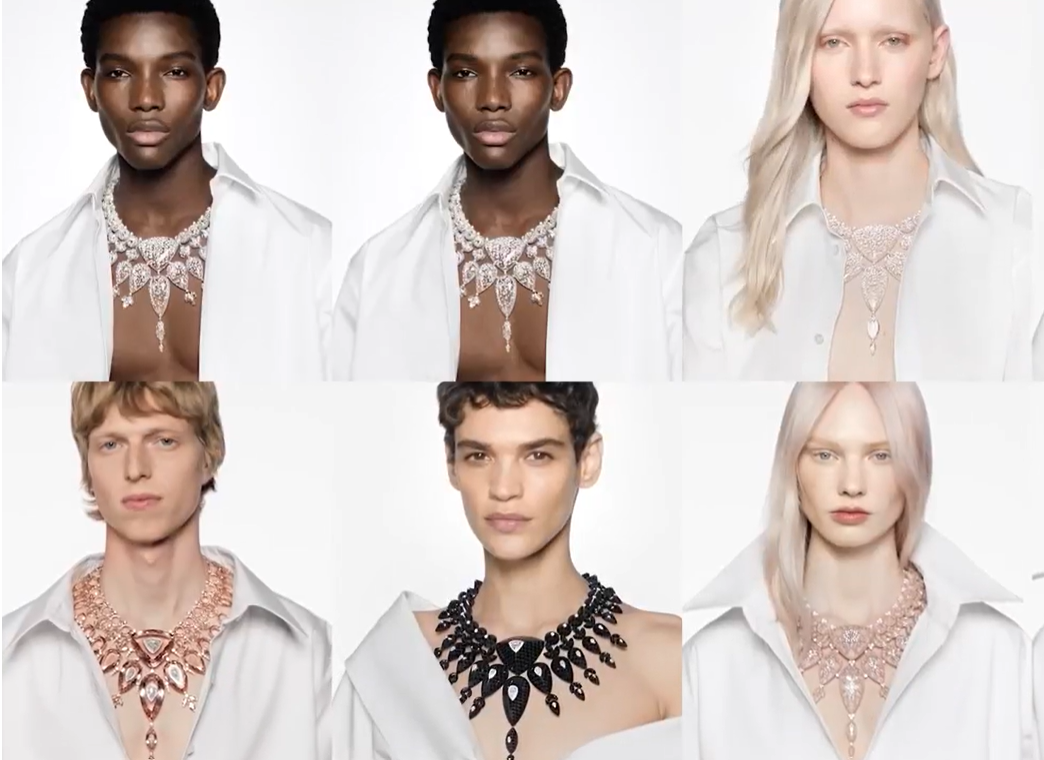
Beyond Traditional Ideas of Gender
The rigid confines of men’s style have dissolved, a movement largely spearheaded by Timothée Chalamet. As a Cartier brand ambassador, Chalamet routinely treats red carpets as a playground for gender-fluid, avant-garde adornment, for example the white gold and emerald Panthère de Cartier necklace he wore at the Golden Globes this year. His choices have triggered a retail ripple effect. Chalamet’s penchant for diamond chains, pearls, and vintage brooches has helped normalise bold diamond consumption among men. Consequently, the secondary market has seen a surge in demand for unconventional statement pieces, while heritage high jewellery houses are actively designing collections that feel instinctively gender-fluid or masculine in tone.
Boucheron, under Creative Director Claire Choisne, has taken this exploration further in its 2026 Carte Blanche: Human Being collection. The rock-crystal and diamond Rain necklace and the sculptural onyx Checkers necklace blur conventional distinctions between jewellery, clothing and art. Designed around the human form rather than a prescribed idea of masculine or feminine adornment, the collection reflects a broader move towards more individual and fluid ways of wearing high jewellery.
“Jewellery is not about gender, but about style. It allows everyone to express their unique personality.”
— Claire Choisne, Creative Director at Boucheron
A More Individual Approach to Bridal Jewellery
In the bridal sector, standard uniform solitaires are increasingly passed over for narrative, bespoke designs popularised by high-profile stars. When Zendaya appeared at the 2025 Golden Globes wearing a 5.02-carat east-west cushion-cut diamond ring by Jessica McCormack, set in a Georgian-style cut-down setting, it brought renewed attention to antique-inspired bridal design. Similarly, Taylor Swift’s elongated cushion shape diamond engagement ring is an antique old mine cut, featuring a softer sparkle that comes from the diamond being hand cut and from an era where diamonds were cut to maximise sparkle from candlelight and oil lamps rather than the high intensity brilliance of modern cuts designed for electric light.When Dua Lipa married in May 2026 wearing a sculptural Schiaparelli skirt suit, her bespoke EÉRA engagement ring offered an equally individual approach: a natural round-cut diamond set low within a substantial 18-carat yellow-gold band. These influences and looks have encouraged buyers to move beyond the standard round brilliant solitaire in thin platinum bands that have for so long been the standard in engagement rings, in favour of vintage-inspired, bold or sculptural looks with far more character and artistic design.

When Cultural Figures Become Creative Partners
While traditional ambassadorships still dominate the landscape, co-designed creative partnerships is also what is bringing new distinction to luxury houses. The partnership between Pharrell Williams and Tiffany & Co. launched in 2024 is a clear example. Their Tiffany Titan capsule collection bridges high fashion, ancient mythos and a sharp punk spirit, using structured, spear-like spike motifs alongside softly contoured links.
The collection demonstrates how design, cultural relevance and creative authorship can contribute to desirability beyond the intrinsic value of the materials alone.
“The detail in all of the jewellery pieces is very intentional, the use of black titanium…it's a physical manifestation of beauty in blackness.”
— Pharrell Williams on the Tiffany Titan collection
What Changing Tastes Mean for Collectors
These developments do not mean that craftsmanship, quality or rarity have become less important. Rather, they show how cultural relevance, creative authorship and changing ideas about who wears jewellery can influence desirability and the way particular pieces are understood.
For collectors and their advisors, changing tastes may provide a timely reason to review an existing collection. Accurate documentation, regular inspections and up-to-date valuations can help protect important jewellery and ensure that insurance continues to reflect its current value.